
Water Heater Anode Rod Replacement in Huntington Beach, CA
Huntington Beach Water Heaters provides water heater anode rod replacement for Huntington Beach, California and the surrounding Orange County coast — tank, tankless, gas, electric and heat-pump systems installed, serviced and replaced to current plumbing, fuel-gas and seismic code.
The anode rod is a length of magnesium or aluminum suspended inside the tank whose entire job is to corrode instead of the tank. Replace it on schedule and you can add years to a water heater; ignore it and rust moves on to the steel shell.
Free Huntington Beach Water Heater Estimate
Share a few details about your unit and your home, and we will price the job for you — nothing owed either way.
How the Sacrificial Anode Protects Your Tank
A storage tank is steel with a glass lining. Any imperfection in that lining exposes bare steel to hot water, which is an ideal environment for corrosion. The anode rod is a more reactive metal, so electrochemistry attacks it first. As long as the rod has material left, the tank is protected.
Once the rod is consumed down to its core wire, protection ends and the tank begins corroding. That is the moment the countdown to a leaking tank really starts — and it happens quietly, years before there's any visible sign.
When to Inspect and Replace
- First inspection at around three years, then every two to three years after.
- Sooner if you have a water softener — softened water consumes anodes noticeably faster.
- Replace when the rod is heavily pitted or the core wire is exposed over much of its length.
- Consider it if you get a sulfur or rotten-egg smell in the hot water — switching rod material often solves it.
Inspection is easiest to fold into an annual maintenance visit or a flush, since the technician is already at the tank.
Rod Types and Choosing the Right One
| Type | Best suited to | Notes |
|---|---|---|
| Magnesium | Most municipal water | Strong protection; consumed faster in softened water |
| Aluminum / zinc alloy | Homes with sulfur odor | The zinc content commonly reduces the rotten-egg smell |
| Powered (impressed current) | Difficult water chemistry | Doesn't deplete; needs an electrical outlet |
| Flexible / segmented | Low overhead clearance | Installs where a rigid rod won't fit above the tank |
What the Job Involves
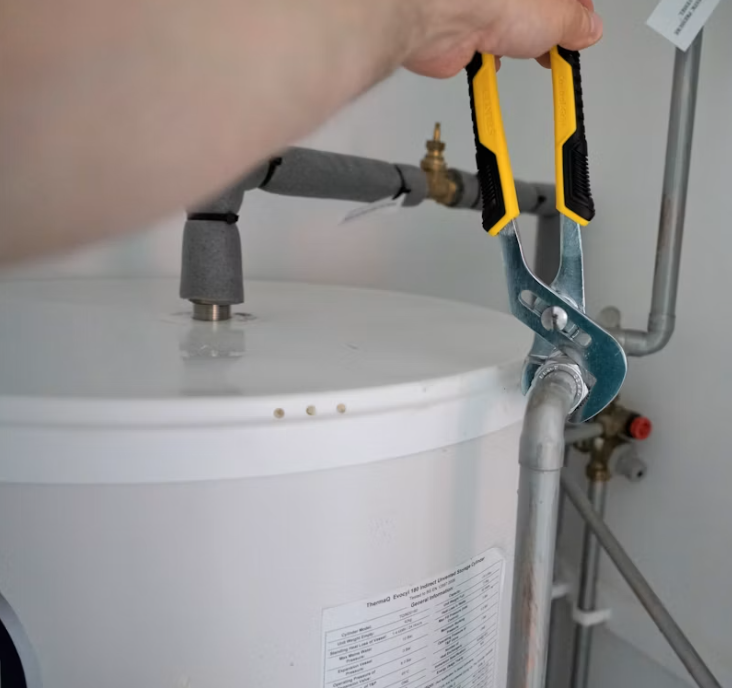
The technician shuts off the heat source and water, relieves pressure, and breaks loose the hex head at the top of the tank — often the hardest part, since rods can seize after a decade. Some tanks have a combination anode built into the hot outlet, which changes the approach. The new rod goes in with fresh thread sealant, then the tank is refilled and checked for leaks.
Low ceiling above the tank? A segmented rod solves that without moving the heater.
Is It Worth Doing on an Older Water Heater?
On a tank under about eight years old with no sign of tank corrosion, yes — it's inexpensive insurance. On a twelve-year-old unit already showing rust at the fittings or base, the protection comes too late and the money is usually better applied toward replacement. A pro can tell you which situation you're in after a look at the rod and the tank.
Anode Chemistry and Rod Selection
Why it works
The rod is a more electrochemically active metal than the steel tank, so corrosion consumes the rod first. It is a sacrificial component with a finite service life, typically three to five years in hard water.
Magnesium versus aluminum-zinc
Magnesium gives stronger protection and is preferred in most homes. Aluminum-zinc lasts longer in aggressive or softened water and helps with sulfur odor complaints.
Powered and flexible rods
An impressed-current powered anode never depletes and suits homes with recurring odor issues. Segmented flexible rods solve low-clearance installs where a straight rod cannot be withdrawn.
Access and torque
The hex head is typically 1-1/16 inch and often seized; breaking it loose without twisting the tank fitting is the part that most DIY attempts get wrong.
Why Anode Service Pays Off Locally
With hard supply water and coastal humidity, Huntington Beach tanks lose their anode protection earlier than the manufacturer's generic interval suggests. Checking at year three and replacing when the core wire is exposed is a low-cost way to add several years to an otherwise healthy tank — provided the check happens before the steel starts corroding, not after rusty water appears.
Related Water Heater Services
Water Heater Maintenance
Bundle anode checks with annual service.
Water Heater Flush
Sediment removal at the same visit.
Tank Water Heaters
How storage tanks are built.
Huntington Beach-Area Communities We Cover
Anode rod service is available across Huntington Beach and nearby communities.
- Fountain Valley, CA
- Westminster, CA
- Costa Mesa, CA
- Seal Beach, CA
- Garden Grove, CA
- Newport Beach, CA
- Cypress, CA
- Los Alamitos, CA
- Stanton, CA
- Santa Ana, CA
- Irvine, CA
Frequently Asked Questions
What does an anode rod do?
It corrodes in place of your tank. Being a more reactive metal, it attracts the corrosion that would otherwise attack exposed steel inside the water heater.
How often should the anode rod be replaced?
Inspect around year three and every two to three years after. Actual replacement intervals commonly land between three and five years, sooner with softened water.
Can I check the anode rod myself?
It's possible, but the rod is often seized in place and requires significant torque plus proper draining. Many homeowners have it inspected during annual service instead.
Why does my hot water smell like rotten eggs?
It's usually a reaction between a magnesium anode and sulfate-reducing bacteria in the water. An aluminum/zinc rod frequently resolves it.
Does replacing the anode rod really extend tank life?
It's one of the few maintenance items with a direct causal link to tank longevity, because a depleted rod means the tank itself starts corroding.
Do tankless water heaters have anode rods?
Most don't, because there's no storage tank to protect. A few hybrid designs do; descaling is the equivalent maintenance for on-demand units.
Talk to a Huntington Beach Water Heater Pro
Tell us the make, the age and where the unit sits, and we will come back with pricing for the work — no strings attached.
Cannot tell which service applies? Pick Not Sure and describe the symptoms in your own words; sorting that out is part of the job.
Free Huntington Beach Water Heater Estimate
Share a few details about your unit and your home, and we will price the job for you — nothing owed either way.